
Most law firms do not plateau because of talent.
They plateau because systems stop scaling.
As complexity rises, partner time becomes the most expensive bottleneck in the firm. We help leadership teams evolve operations, positioning, and execution so growth becomes predictable again.
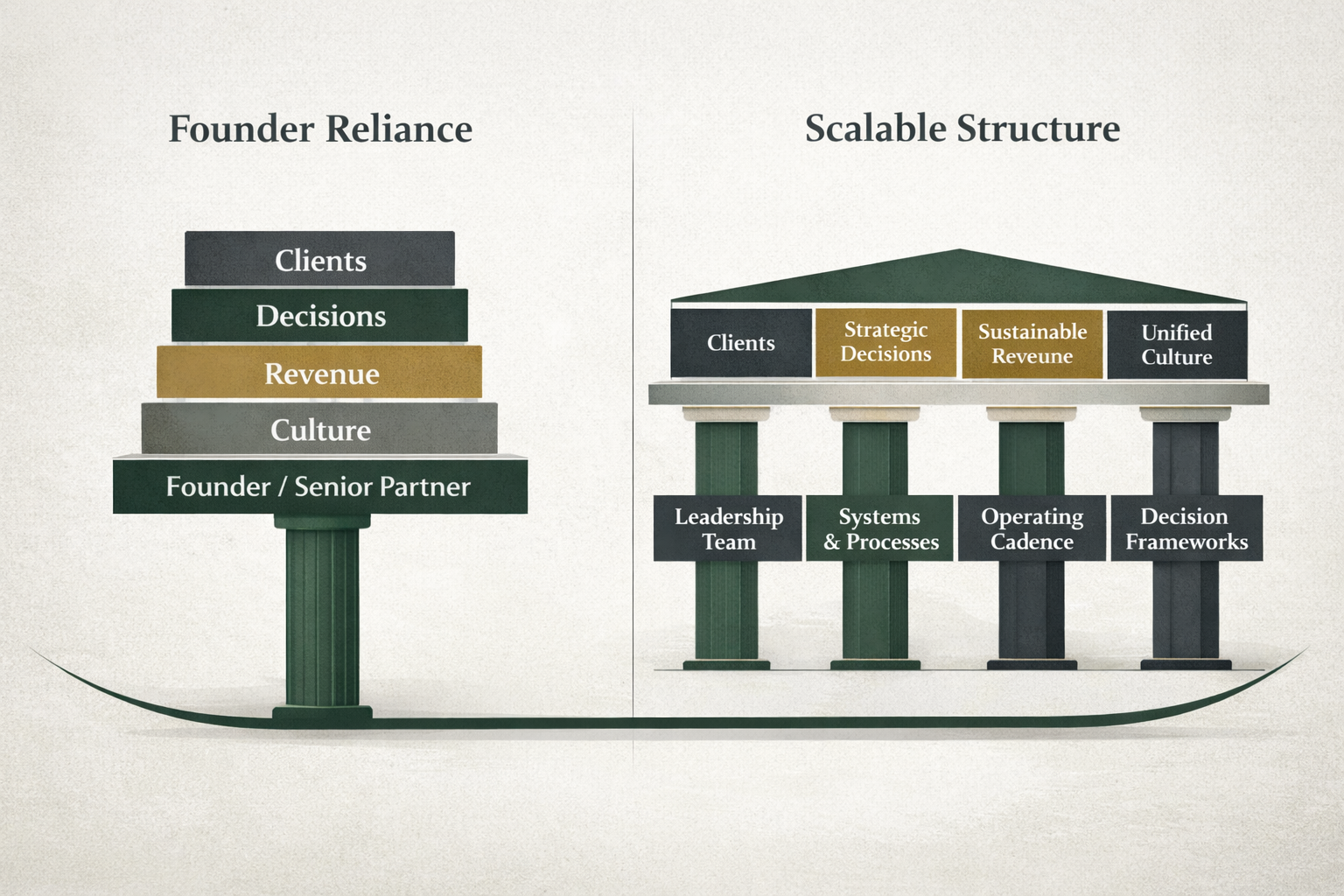
Being a great lawyer is not the same as running a scalable firm.
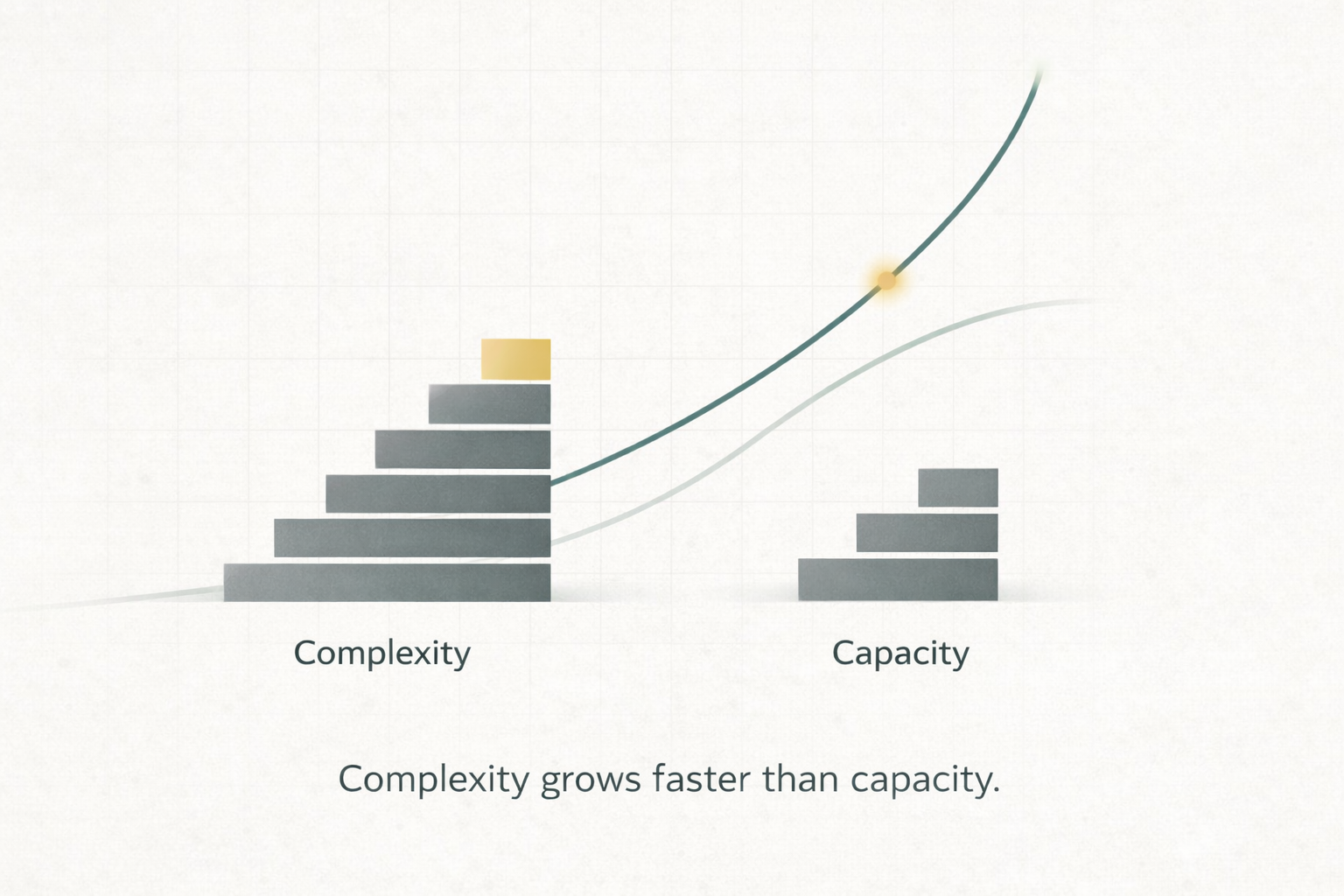
As a Managing Partner, you have mastered the work. But as the firm grows, the complexity of people, intake, delivery, and profitability expands faster than your available time. The more you grow, the more the firm relies on you personally, and that becomes the bottleneck.
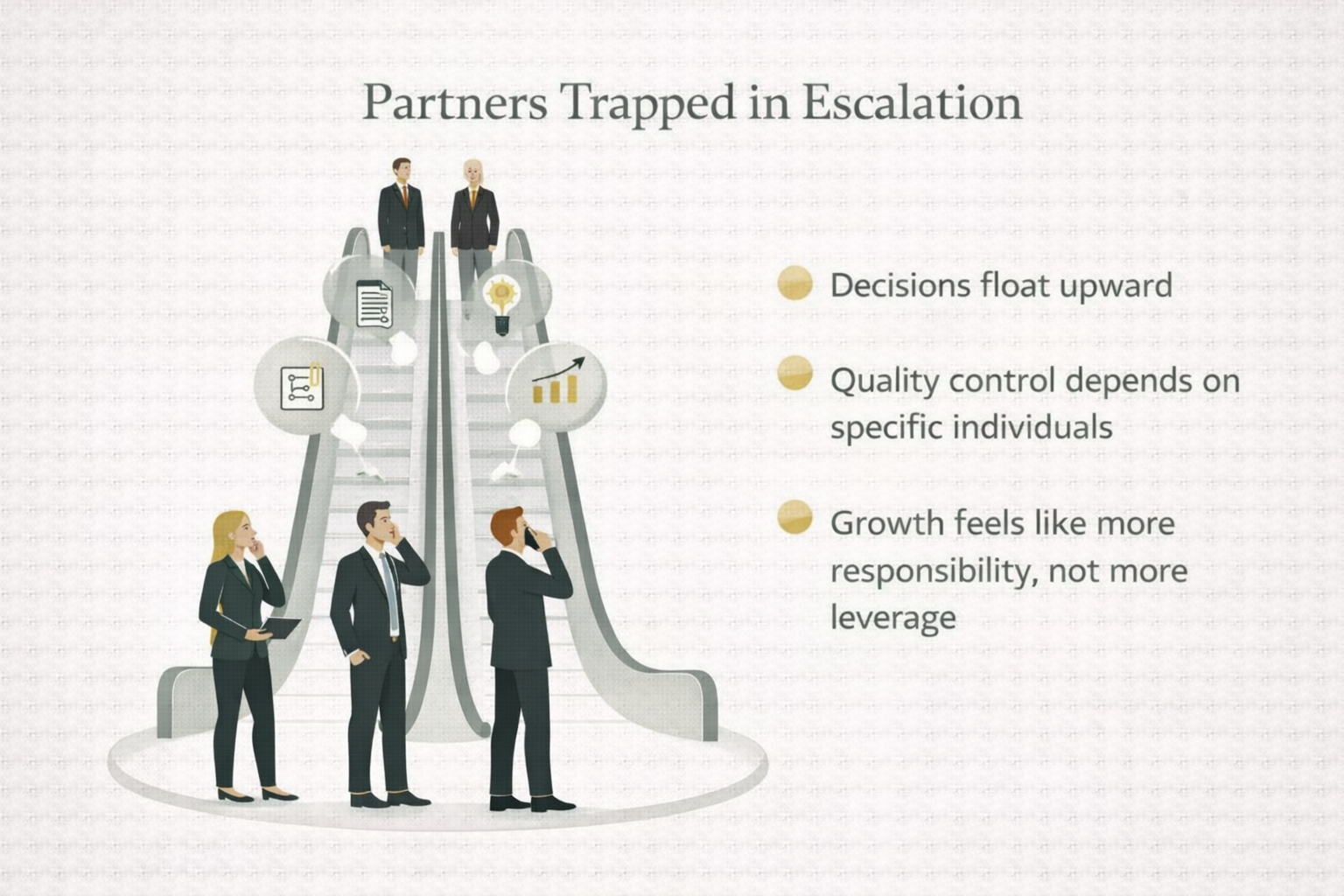
Partners trapped in escalation
Decisions float upward. Quality control depends on specific individuals. Growth feels like more responsibility, not more leverage.
Plateau disguised as “busy”
Revenue may rise, but profit and partner capacity stall. The firm becomes harder to run, harder to staff, and harder to scale without losing what made it strong.
If this sounds familiar, read Founder’s Growth Paradox. It explains why high-performing partners become the constraint, and what to change first.
Moving from a “practice” to a professional business.
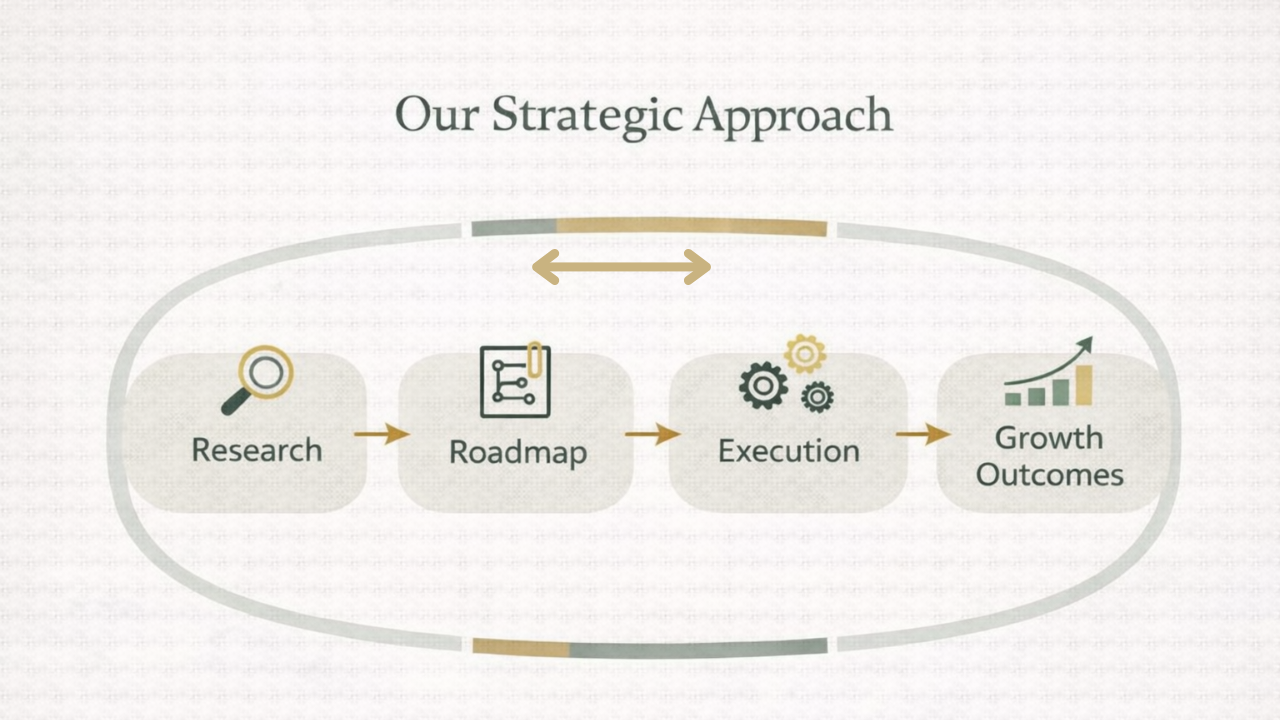
We help firms transition from a collection of high-performing individuals to a unified, systems-driven organization. The goal is not to erase what made you successful. The goal is to make it repeatable.
Control over time and execution
When roles, handoffs, and standards are explicit, partners stop being the glue. The firm becomes easier to run and easier to grow.
Client experience and delivery
Consistency protects quality. It also protects brand trust, referrals, and reputation as you add new attorneys and expand capacity.
Growth gets expensive when your operational DNA is leaking.
We look for the specific places profit and capacity are bleeding: billable leakage, intake inconsistency, workflow friction, staff churn, and tech spend that does not return value.
Leak points that never show up in dashboards
The most damaging friction is often invisible: unclear ownership, inconsistent decision standards, and partner overrides that reset the system.
Profitability becomes a byproduct of structure
When intake, delivery, and leadership cadence are defined, the firm can grow without adding chaos or coordination cost.
Optional: “Operational DNA” visual
Add a diagram or abstract “system” image here to reinforce the idea of structure and repeatability.
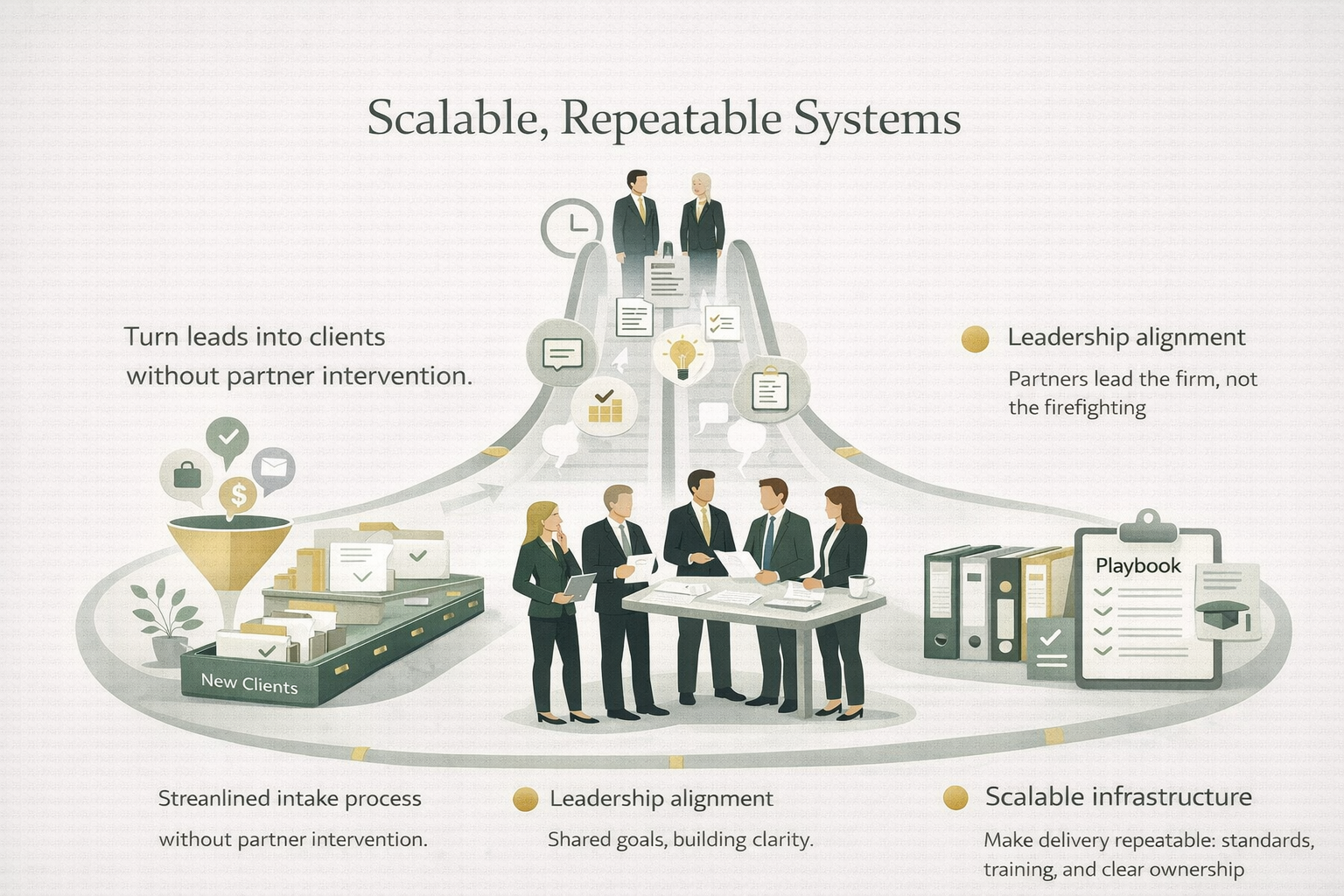
A surgical look at the firm infrastructure that drives scale.
No generic advice. We focus on the handful of system decisions that unlock leverage fast.
Turn leads into clients without partner intervention.
Define qualification standards, handoffs, and expectation-setting so intake becomes consistent, fast, and aligned to the firm you want to build.
Partners lead the firm, not the firefighting.
Build decision clarity, accountability, and an operating rhythm that reduces re-litigation and keeps execution moving.
Create playbooks that reduce chaos as you add attorneys.
Make delivery repeatable: standards, templates, training, and clear ownership so quality holds as capacity expands.
Stop “complexity creep” from eating the margin.
Audit cost-to-serve, tech stack friction, and staffing ratios so increased volume does not flatten profitability.
The predictable failure modes of growing law firms.
These are the patterns we see repeatedly when strong firms stall. Each one is fixable, but only if you treat it as an operating problem, not a motivation problem.
The billable hour ceiling
Revenue depends on more partner hours, but there are no more hours to give.
Talent leakage and recruitment wars
Without clear systems, the firm burns people out and loses great talent to more structured environments.
The rainmaker dependency
If the Managing Partner is not selling or involved, growth slows. There is no reliable engine.
Operational bloat
Revenue rises, profit stays flat. Overhead, tool sprawl, and friction eat the margin.
The AI implementation gap
You know AI is coming for efficiency and expectations. But without guardrails, it feels risky and chaotic.
Complexity creep
Every new hire adds coordination cost. Without SOPs, the system becomes harder, not stronger.
Quick answers for senior partners.
Direct, practical clarity. This is how we typically start with leadership teams.
How do we know if we have hit the Founder’s Paradox? +
If growth has plateaued despite a high caseload, or if you are the bottleneck for major decisions, you are in it. Read the full breakdown here: Founder’s Growth Paradox.
What is the first step to scaling without losing quality? +
Systematized intake. Most firms lose quality and margin at the first touchpoint. Clear qualification and handoffs protect capacity and standards.
Can a small to mid-sized firm compete with Big Law? +
Yes. The market rewards operational agility. Firms that build lean systems, clear positioning, and consistent execution can outperform larger competitors in both speed and experience.
Why is our profit margin shrinking as revenue grows? +
Complexity creep. As volume rises, firms add staff and software to manage chaos. Without standard operating procedures, each addition increases coordination cost more than billable value.
Remove partners from the center of every decision.
The transition from boutique to market leader requires a shift: from heroic effort to repeatable leverage. If you want growth without chaos, start with a short, focused conversation.
Who this is for
Senior partners and founder-led firms with real demand, strong outcomes, and a desire to build a scalable operating system without losing quality or culture.
A clear view of what is actually constraining scale, plus a practical path to reduce friction, stabilize profit, and protect partner time.
No generic “marketing plan.” No noise. No overbuilding. Only the moves that create leverage.
Primary CTA
Add your preferred booking widget in Elementor right here (below this HTML block), or link this button to your scheduling page.
Optional: add a founder photo, a clean abstract, or a “systems” visual.
