
Every firm tells a story about itself. Every market tells a story about that firm. Law firm growth lives in the small and often painful distance between those two narratives.
The Internal Narrative is Polished
Spend ten minutes with a founder or managing partner and you will hear a clear articulation of who they believe they are. They talk about being selective, strategic, and premium. They describe responsiveness as a core strength and culture as a differentiator.
None of this is a lie; most of us genuinely believe it. However, your “Declared Reality” is often formed in a vacuum. It is built in leadership meetings and brand exercises. It reflects our best intentions rather than our actual evidence. Intention is necessary for a business to start, but it is not what a client actually buys. For many firms, scaling requires a shift toward more efficient operational systems that bridge this divide.
Client Reality Forms Somewhere Else Entirely
Clients do not experience your firm through your three year strategic plan. They experience it through friction.
They feel the tone of the intake call. They notice the three hour delay in a follow up email. They sense the confusion when a next step is not clearly defined. These moments happen operationally rather than philosophically. Your brand is defined every day by the person answering your phones instead of the partners sitting in a boardroom. That is where the gap begins to widen.
Where the Misalignment Shows Up First
You can almost always see the divergence in four specific signals. These are not financial metrics. They are human experiences that dictate your client experience quality.
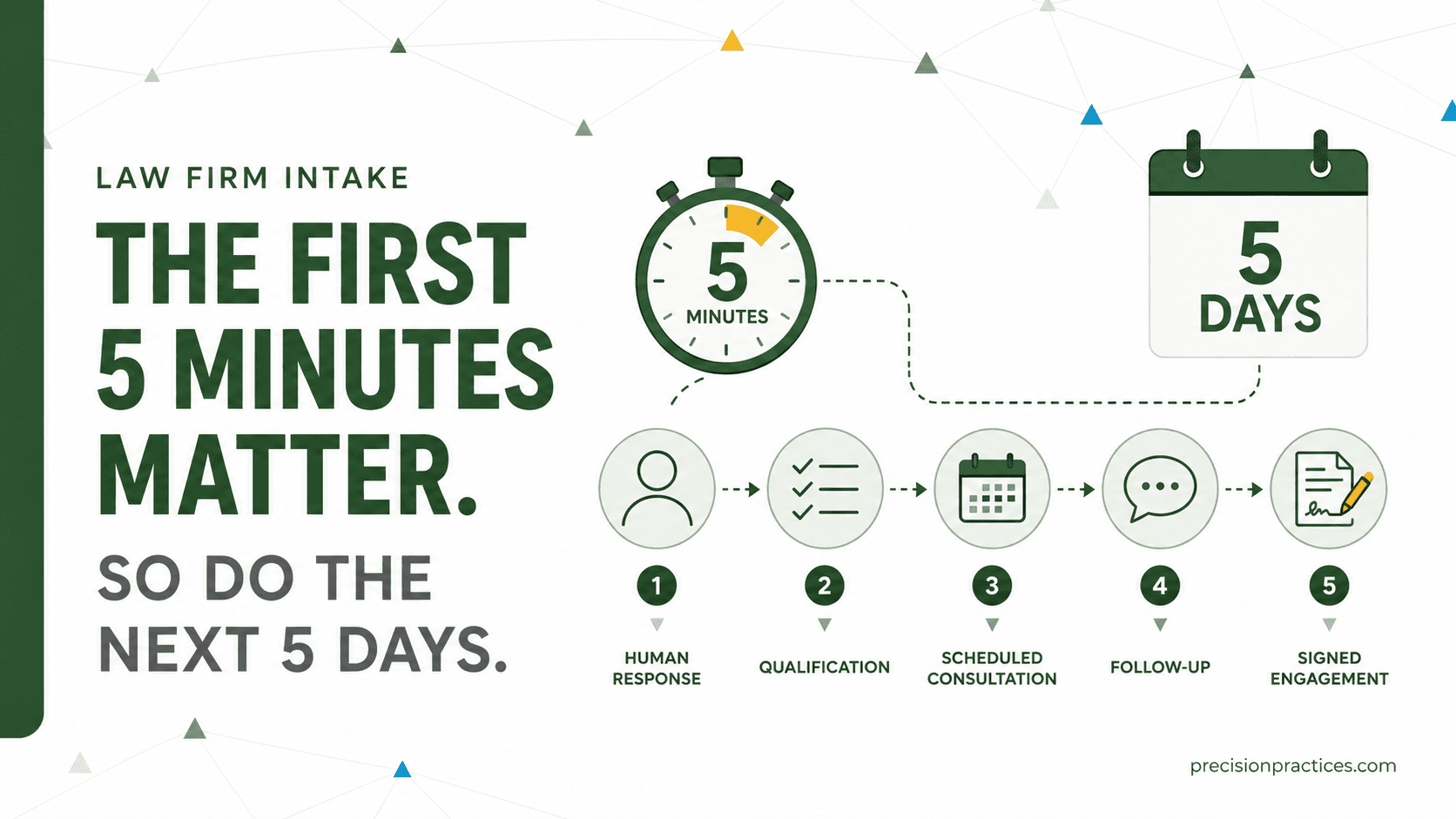
Responsiveness: Firms love to describe themselves as high touch. However, when we audit intake systems, the reality is often different. Speed is a signal of respect. Prospects interpret delays as institutional disorganization.
Positioning: Leadership may believe the firm handles sophisticated matters. Yet if the website reads like a generalist directory, your differentiation is muted. Premium positioning requires the courage to be specific in public.
Selectivity: Many of us pride ourselves on being selective about work. But if your intake system lacks the infrastructure to filter leads, selectivity is just a wish.
The Journey: Experience is not defined by the final legal outcome. It is defined by how organized and intentional the journey felt along the way. Research from organizations like the American Bar Association often highlights that communication and transparency are the primary drivers of client satisfaction.
Why Leadership Rarely Sees the Gap
As founders, we rarely interact with our own firms the way a prospect does. We do not call the main line or wait by the phone for a callback. We see the internal effort: the late nights and the complex strategy.
But clients do not buy our effort; they buy their own confidence. When leadership perception is based on how hard we work and client perception is based on how easy this is for me, misalignment is inevitable. According to Gartner’s research on customer effort, reducing friction is one of the most effective ways to drive long-term loyalty.
Frequently Asked Questions About Law Firm Growth
Law firm growth rarely stalls because of ambition alone. More often, it slows when the client experience, intake process, positioning, and operational systems do not match the story leadership believes it is telling.
What slows law firm growth even when a firm is doing strong legal work?
Strong legal work is essential, but it is not the only thing prospects evaluate. Growth often slows when response times are inconsistent, next steps are unclear, the website feels too general, or the intake experience creates friction before trust is built.
Why do some law firms feel busy but still struggle to grow?
Many firms are working hard, but effort and clarity are not the same thing. A firm can be busy internally while still creating confusion externally. If prospects do not quickly understand who you help, how you work, and what happens next, growth can flatten even when demand exists.
How does intake affect law firm growth?
Intake is one of the earliest and most important growth levers in a law firm. It shapes first impressions, determines how quickly leads move forward, and influences whether qualified prospects feel confident enough to hire. Slow follow-up, unclear options, or poor handoffs can quietly cost revenue.
What does positioning have to do with growth?
Positioning affects whether the market sees your firm as distinctive or interchangeable. If your messaging is too broad, prospects may not understand your strengths, sophistication, or fit. Clear positioning helps the right clients recognize why your firm is the right choice.
Can a law firm have a strong reputation and still have a weak client experience?
Yes. Leadership often sees the firm through strategy, effort, and intent. Clients experience the firm through phone calls, emails, timelines, and handoffs. A respected firm can still lose momentum if the day to day journey feels disorganized or difficult to navigate.
How can a law firm identify the gap between intention and client reality?
Start by reviewing the firm the way a prospect would. Call the office, submit a form, evaluate response speed, review the website for specificity, and look at whether the next step is obvious. Audits focused on intake, clarity, positioning, and AI visibility can reveal where growth is being constrained.
What should a law firm improve first to support better growth?
For most firms, the first priorities are faster intake response, clearer positioning, stronger messaging, and a smoother client journey. Fixing those areas tends to improve conversion, trust, and overall growth efficiency faster than adding more marketing activity on top of a weak foundation.